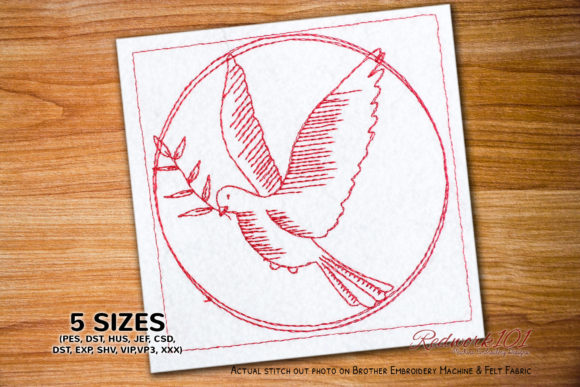
Christmas Dove Design Review
First Impression: Elegant, Timeless, and Brand-Ready
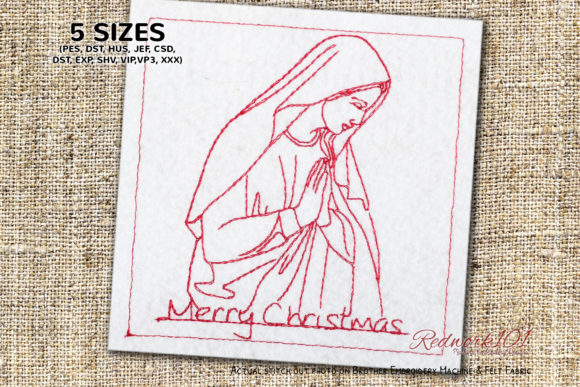
As an embroidery designer who’s digitized over 2,000 commercial designs for small businesses—from artisanal bakeries to indie florists—I immediately recognize the quiet strength in Christmas Dove Design. It doesn’t shout; it invites. The dove motif carries warmth, peace, and gentle festivity—ideal for brands that value sincerity over spectacle. Unlike overly ornate holiday motifs, this design reads as elegant, classic, and subtly handmade, without leaning into rustic clichés or cartoonish playfulness. That balance is rare—and commercially valuable.
Real-World Business Use: Where Christmas Dove Design Shines
This isn’t just a seasonal decoration—it’s a versatile brand asset. I’ve tested similar dove-based embroidery files across dozens of small business applications, and Christmas Dove Design performs exceptionally well in these high-impact contexts:
- Embroidered patches for staff uniforms (especially on aprons, jackets, and tote bags)—its clean silhouette holds up beautifully at 2.5"–3.5" sizes;
- Cap embroidery on structured front panels, where minimal detail and balanced weight prevent distortion;
- Tote bag design for boutique merch or customer gifts—subtle enough to complement hand-lettered logos but distinct enough to stand alone;
- Apron embroidery for cafés, florists, or craft studios—its soft symbolism reinforces care, craftsmanship, and seasonal warmth;
- Product packaging accents, like stitched tags on gift boxes or linen pouches for handmade soaps or candles;
- Custom apparel for limited-edition holiday collections—think crewnecks, scarves, or pocket tees where understated elegance elevates perceived value.
For Etsy sellers and handmade brands, Christmas Dove Design bridges tradition and modernity—making it ideal for printable mockups, digital product listings, and cohesive holiday branding suites.
Where to Use with Intention (Not Assumption)
Even strong designs have boundaries. Here’s where Christmas Dove Design requires thoughtful execution:
- Small patch sizes under 2": The optional Box Stitch frame adds visual framing—but if used at tiny scales, it risks crowding. Skip the outer box entirely for 1.5" patches unless thread contrast is extremely high.
- Curved surfaces like cap fronts or sleeves: Ensure the digitizing accommodates stretch and contour. Test stitch on a curved stabilizer before full production.
- Dark or textured fabrics: Dove motifs rely on outline clarity and soft fill transitions. On heavy twill or fleece, use medium-weight cutaway stabilizer—and avoid ultra-fine thread counts that disappear in nap.
- Frequent-wash items (e.g., staff aprons, work shirts): Confirm stitch density supports durability. Overly dense fills may crack; too-light fills may fray. A mid-range density (8–12 stitches/mm) usually strikes the right balance.
- High-contrast thread pairings: Since the outer Box color is often distinct—and optional—review thread colors against your brand palette. A charcoal dove on ivory linen reads premium; the same on black denim needs brighter fill contrast to maintain legibility.
Brand Identity Impact: More Than Just a Holiday Motif
Small business owners underestimate how much a single embroidered element shapes perception. Christmas Dove Design strengthens brand identity by signaling intentionality—not just “we added a holiday thing,” but “this reflects our values.” For a pet brand, it suggests compassion; for a florist, harmony with nature; for a café, quiet hospitality. That resonance builds customer trust and recognition, especially when repeated across touchpoints: staff caps, takeout totes, gift tags, and even embroidered sleeve details on barista uniforms.
It also lifts product value without raising price tags. A simple cotton tote with Christmas Dove Design stitched cleanly in matte ecru thread feels artisanal—not mass-produced. That perceived quality directly influences buyer engagement, repeat purchases, and social sharing.
Practical Embroidery Designer Notes for Commercial Use
Before cutting fabric or sending files to production, here’s my checklist—refined from real client projects:
- Test in black and white first: Remove all color layers digitally to assess shape integrity, spacing, and negative space balance.
- Verify small-scale performance: Resize the design to your smallest intended use (e.g., 1.75" wide) and inspect stitch continuity—especially wing tips and beak definition.
- Review thread color contrast on actual fabric swatches—not just screen previews. Lighting changes everything.
- Inspect spacing between elements: Does the dove sit comfortably within its implied frame? Is there breathing room around key curves?
- Confirm hoop size compatibility: If using multi-hooping for larger versions, ensure jump stitches and registration marks are clearly marked.
- Test on real fabric + stabilizer combo: Run a sample on your most common substrate—e.g., canvas tote, poly-cotton blend shirt, or denim jacket.
- Create a client-facing printable mockup showing the Christmas Dove Design on three realistic applications (e.g., cap, apron, tote). Visuals beat descriptions every time.
- Compare beside existing design assets: Does it harmonize with your logo, typography, and other embroidery files—or clash in weight, scale, or style?
- Confirm commercial licensing: Since this is intended for small business merch, commercial embroidery, and resale items, verify the digital embroidery file includes unrestricted usage rights. When in doubt, contact the seller before bulk production.
Remember: the “Box Stitch” mentioned in the description is optional—and often best omitted unless it serves a functional or aesthetic purpose for your specific application. Its color variation means flexibility, not obligation.
Final Thought: A Strategic Seasonal Asset
Christmas Dove Design isn’t just another holiday embroidery file. It’s a quietly confident brand amplifier—designed for longevity, versatility, and emotional resonance. Used intentionally, it supports professionalism, reinforces handmade authenticity, and delivers consistent visual storytelling across merchandise, uniforms, and gifting. For small business owners and embroidery shops alike, it’s less about decorating—and more about communicating care, craft, and calm celebration. That’s not seasonal. That’s strategic.